Writer’s Notebook
Please comment on my posts or share your ideas about writing here.
CLICK: http://www.stephenfaulds.org/stefau3/?p=88 Then scroll down to the comment box at the bottom of the page.
LINKS
http://australianplays.org/playwright/ASC-3541
http://www.smashwords.com/profile/view/stephenfaulds
DISCLAIMER
These are reflections on my own writing process. I hope some of them may be useful to others but I am not attempting to create rules for all writers.
POSTS
When all else fails you can still write.
19.5.13
If you would rather write an undiscovered masterpiece than a best seller you are definitely a writer.
18.5.13
I need a badge or a tee shirt that tells people the reason I am talking to myself is because I am a writer inventing dialogue for my characters.
17.5.13
Narrative is a faculty of the imagination rather than simply an element of literature, drama or music. We each tell a story with own life. The creative spirit finds expression in our choices and responses and the way we shape the events that mark the passing of our days.
16.5.13
Writers are creatures of the night, of lonely places, of silences and the forgotten echoes of human emotion. Listen to writers. They reflect the nuances of your soul.
15.5.13
Language conventions and literary techniques are tools that must become invisible to the writer’s mind. They are best used instinctively to express the writer’s narrative purpose.
14.5.13
Writing a novel is not a great achievement. The first draft comes straight from the imagination, which is a kind of conduit to the universal consciousness. Great literary achievement results from working on a novel and shaping it until it is flawless.
13.5.13
Ideas do not make a writer. Everyone has ideas. Writing does not make a writer. Many people write. It is rewriting that makes a writer.
12.5.13
A character begins life as a description. The reader suspends disbelief and creates a three dimensional person from the words of the writer.
11.5.13
Writing is an engagement with the mystery of human behaviour.
10.5.13
Writing can’t be taught. There are so many styles and genres, many of which defy each other’s rules of engagement. A writer must develop from within, from a love of reading and a desire to write. The form will be determined by the passions of the writer, and informed by the discipline of his chosen genre.
9.5.13
Why do I write? As Gertrude Stein didn’t say: I write because I write because I write.
8.5.13
A first draft is like an adolescent full of promise. It needs the discipline of an adult writer to fulfil its potential.
7.5.13
Some stories seem to come almost pre-written as if from the ether but even those stories need polishing drafts.
6.5.13
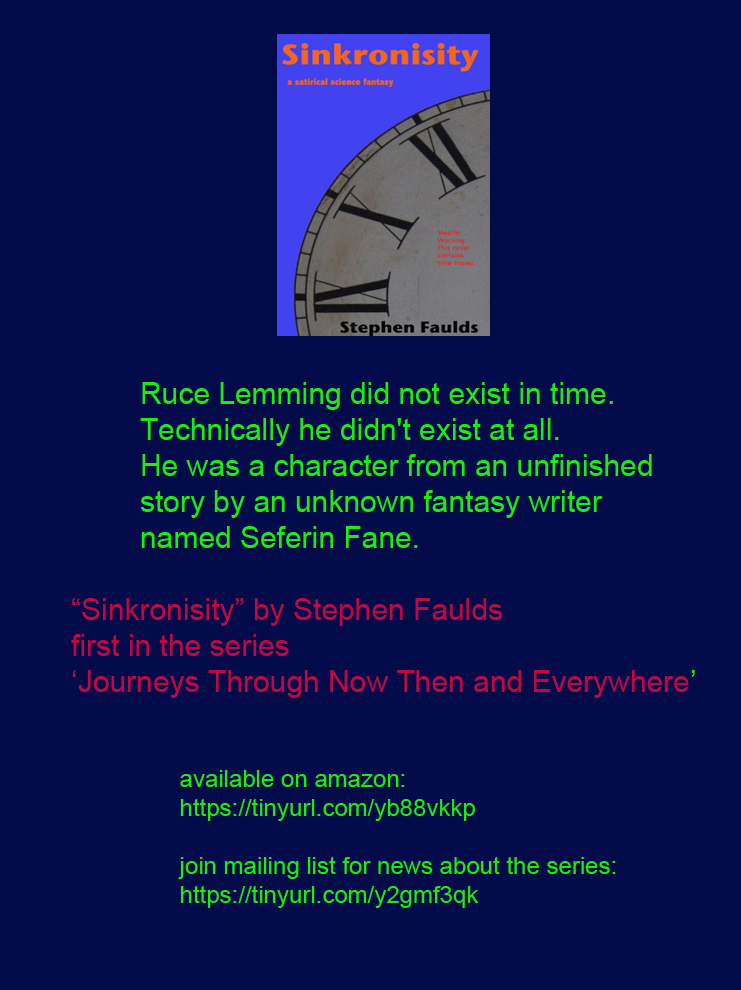
The cover of a novel is a picture that is worth more than just a thousand words. It has to suggest the most appealing aspect of a long and complex story and attract the type of reader most likely to want to read it.
5.5.13
In some old cultures Medicine Men chanted to induce visions. Sometimes writing is like that. You keep writing and whole landscapes and stories appear in your mind. Calling it imagination trivialises it. Really it is a shamanic experience.
4.5.13
I write to remember, I write to forget, I write to engage, I write to escape, I write to live, I will write until I die.
3.5.13
Writing is a tangible link between the past, the present and the future. A remembered experience can be blended with current reality and transformed into something that is yet to happen.
2.5.13
Characters should never get what they want without loss. A writer must be quite Machiavellian with characters, make them suffer. They should arrive at their destination minus a leg or a loved one. The Hero journey was not meant to be easy. Characters should reflect the fact that in life we all get scarred, even if it is only inside.
1.5.13
Writing is a place where a writer goes to create new places.
30.4.13
Advice For A Young Writer
Choose a time of the day when you know you will not be interrupted for one hour. Turn off your phone and all social media. Sit down and write whatever you can. If you don’t have something you want to write about just describe places, people and events in your life until you are able to invent something. Do this seven days a week without fail. Don’t judge how much you write as long as you spend the full hour at your desk. You will soon find that ideas will emerge and your hour will become more productive.
29.4.13
Sometimes words flow, sometimes they drip. The writing process is one of constant adjustment to the supply of words. I have stared at single sentences for hours and I have written thousands of words in a single hour. I still don’t know where words come from. I am just grateful when they do.
28.4.13
When you meet someone and you suddenly begin describing them in your head you know they will be the basis of an interesting character. You have to be careful not to learn too much about them so their life does not take over your story.
27.4.13
Don’t worry about the truth. Keep writing. If you are writing from your heart the truth will emerge.
26.4.13
Writers are people who not only make sense of experience through words but actually understand it in words.
25.4.13
Sometimes the writer is not the best person to decide when a final draft is complete. Second and third opinions add perspective.
24.4.13
With each draft a writer develops a more intimate relationship with his story until finally he is calibrating subtle nuances that hinge on choices between words that to the observer might seem almost identical.
23.4.13
I write for the reader most like myself. I want poetry and mystery and humour. I expect to have to work for my understanding. I don’t want to be spoon-fed like pulp fiction readers.
22.4.13
Finishing a first draft is like finishing work on Wednesday. It’s hump day, not Friday.
21.4.13
Dialogue is character in action. It is not a mechanism for backstory or information. Characters should speak to each other, not the reader.
20.4.13
The description of setting should enhance the action rather than distract the reader’s attention. Setting is only important as a context for action. A novel is not a travelogue; it is a story.
19.4.13
Character description in a novel should be sketched rather than painted in detail. It should suggest images without impeding the flow of the story. The history of a character is for the writer, not the reader. It should be deleted with the backstory. Full characterisation emerges through the behaviour of the character in the story proper.
18.4.13
Classic fiction often stands the test of time better than expository text because it deals with the universal as much as the specific. Shakespeare is more relevant today than any political or social Elizabethan treatise. Dickens is more relevant than any Victorian essay.
17.4.13
A story begins with a character and a question. Will the character succeed or fail? In the answer to the question the reader finds out who the character is.
16.4.13
To begin writing a novel is to hear the sounds of distant music and to believe they are the first notes of a symphony.
15.4.13
Stories must surprise in some way. The reader is bored by anything that is too familiar, for example the memoir of an unremarkable life, or a clichéd murder plot. The writer has to add or combine the elements of story in unexpected ways.
14.4.13
Stories don’t happen. They must be told. Even stories based closely on actual people and events must be stitched together with the conventions of storytelling to make them of interest to the reader. Stories are essentially rhetoric. The interest is in the way they are told.
13.4.13
Literature’s best characters are so well constructed they can be duplicated to perform beyond their stories. Peter Carey took the characters of Dickens and wrote Jack Maggs. Directors take characters from novels and bring them to life in films. Good characters are as substantial as real people. Perhaps more so.
12.4.13
Everything a character does in a story must be congruent with its psychology and physiology. Believable characters must be true to themselves rather than subservient to the plot.
11.4.13
Developing a character is the art of imagining a complete psychology and complementing it with a physiology. This can be done intuitively or by constructing from an imagined history.
10.4.13
Writing never occurs in a vacuum. Writers choose the stimuli to which they respond. People suggest characters, landscapes suggest settings, emotions suggest conflict, events suggest plots. Imagination makes stories of them all.
9.4.13
The key to writing is the dissonance between experience and understanding. Fully realised beings don’t write. Only the unenlightened need to write. When I am a Buddha I don’t expect to be writing at all.
8.4.13
Writers need to take time out to smell the flowers without describing their fragrance.
7.4.13
The sense of achievement in getting to the end of a manuscript is tempered by the fact that the first draft is only the half way mark.
6.4.13
If you have forgotten something, ask a writer. He probably has it jotted down somewhere.
5.4.13
When you do not have a pen or a computer and you begin trying to memorise your thoughts, you know you are a writer.
4.4.13
Coming to the end of a story as writer is similar to coming to the end of a story as a reader. You feel a little sad that it is over. For the writer it’s worse because what lies ahead is the grind of rewriting and editing and getting it published.
3.4.13
A sophisticated reader thinks like a writer. The writer must be devious to stay one step ahead of him so he doesn’t become bored by the predictability of the characters and the plot.
2.4.13
Characters should struggle to know themselves. The reader must see the flaws in a character, before the character is enlightened or redeemed. It is the character’s need for self-discovery that makes him multi-dimensional and interesting.
1.4.13
Sometimes ideas arrive at inopportune moments. If you see me wandering off from the party, or pulling over to the side of the road to scribble something down you know why. Sometimes the most important part of a story comes when I am busy doing something else. Last night the climax scene of my current play came to me while I was driving on the freeway.
31.3.13
A writer should never worry about where ideas come from. Just be thankful. The Muse is sacred and not to be disturbed.
30.3.13
Shut up and write.
29.3.13
A script is a sketch from which a director creates a painting. If the outline is not accurate the performance will lack integrity.
28.3.13
A script is not a story to be read. It is a blueprint for the creation of a three dimensional drama. The dialogue is crucial. It enables the actor to find the voice of the character and bring it to life.
27.3.13
Drama that does not arise from conflictual relationships between characters is mere histrionics. Characters must give each other reasons to show emotion. Like actors they must act and react to create drama.
26.3.13
Characters are like actors. They are not on stage to look pretty. They are there to have conflict with other characters.
25.3.13
The final draft of a story is the most important. The longer you wait the more likely you can read it objectively, the more likely you can read as if it is somebody else’s story. Then you can judge just how effective it is and what adjustments need to be made.
24.3.13
Even stories that write themselves – the ones that just flow out of your head – need the nip and tuck of a rewrite. Readers don’t want little gaps and blind spots or clumsy transitions in a narrative. They want something that is perfectly finished, like a picture.
23.3.13
The final drafting of a story is like spitting and polishing a car, getting all the little blemishes off so it can drive out, gleaming in the sunshine.
22.3.13
How long is a piece of string? A story determines its own length with its pace and rhythm and the balance of its narrative. It takes a certain number of words to tell a particular story without gaps and without verbosity. A writer in tune with the narrative will instinctively find the optimum length.
21.3.13
One day I might join Writer’s Anonymous. I will have to lock myself in a Buddhist monastery without any access to pen, paper, or word processor. I will either end up scratching words on the walls with my fingernails or achieve enlightenment and enter the wordless state of Nirvana. Meanwhile I will just live in the world of illusion and continue to write every day because it is my karma and my addiction.
20.3.13
Please excuse the writer who indulges in rhetoric. Language is his plaything and he delights in exploring the nuances of its many and varied forms.
19.3.13
Some stories arrive in my mind with an ending. All I have to do is create a logical set of steps to get there. Others arrive with only a beginning. That’s when writing becomes a journey of discovery. Until I find the ending, I don’t know if is going to be worthwhile.
18.3.13
Writing novels is not for the faint hearted. Words often come easily but to make something of them that will stand with so many thousands of brilliant novels in bookshops and libraries is a daunting task.
17.3.13
Designing a murder mystery plot is like stitching a patchwork quilt. Every piece must fit neatly and the matching pieces must be far enough apart that the reader doesn’t see the pattern until the entire quilt is revealed at the end of the story.
16.3.13
Every writer, should exercise themselves with the discipline of a murder mystery to strengthen the plot muscles and develop characterisation fitness.
15.3.13
When the freedom of imagination is unleashed in the first draft it must be tempered with the discipline of plot structure in subsequent drafts. The best storytelling is controlled expression.
14.3.13
Transforming real life into a credible plot is more difficult than writing pure fiction. As Hitchcock said, you have to leave out the boring bits. You also have to make characters believable and events plausible with only the facts at your disposal. Real life often lacks the verisimilitude that fiction requires.
13.3.13
The art of suspense includes knowing what your protagonist is thinking but concealing it from the reader until it is evident in his actions. A twist ending must not only be a surprise. It must satisfy logic and be congruent with everything that has happened in the story.
12.3.13
Characterisation is getting to know the people in your stories. If you know your characters they will become believable to the reader.
11.3.13
Plotting is working out how to get to the end you have devised without letting the reader imagine it before they finish reading the book.
10.3.13
Writer’s Block is the novel in the word processor or the filing cabinet that you have never shown anyone. It probably needs more work but you wont know that until you get a second opinion.
9.3.13
Writer’s Block is not just being unable to write; it is doubting that what you write is any good; it is writing and deleting; it is wondering if your story is worth telling, or if you have a story at all.
8.3.13
There are two writing exercises I find valuable. The first is to write everything that comes into your head – the stream of consciousness technique. The second is the Zen Koan, reducing ideas and descriptions to the barest minimum.
7.3.13
All writers should keep journals. Writing without purpose, reflecting spontaneously without trying to shape the outcome is therapy for the working writer. It provides the mind with a holiday from serious writing.
6.3.13
Good writing is like meditating with a pen in your hand. The ideas flow directly from your subconscious to the paper. If you have good keyboard skills the process is the same with a computer.
5.3.13
Writing is the pursuit of experience that can be replicated in the mind. The relationship between that experience and reality is determined by the reader.
4.3.13
A script should always be read aloud. It is dialogue; it is designed to be heard. Some prose dialogue should also be read aloud to appreciate the nuances of the character’s speech.
3.3.13
Good writing transcends genre. It appeals to all readers.
2.3.13
The way characters react to each other is the test of their authenticity. A well-conceived character is like an actor playing a role. His believability depends on how he relates to other characters in ways that are consistent with his own personality.
1.3.13
Dialogue is the key to characterization. When the reader can hear the nuances of a character’s speech they get a direct impression of personality and attitude. They are in the presence of the character. It comes to life.
28.2.13
Writing is time filled with words.
27.2.13
Good dialogue has to resemble ordinary speech while subtly moving the story forward and simultaneously sounding like conversation with its own existential purpose.
26.2.13
Writing is a process of synthesis from experience to words. The writer translates what he sees, hears, tastes and feels into words. Reading is a process of synthesis from words to experience. The reader translates words into imagined experience.
25.2.13
A writer leaves a trail of words where his thoughts have gone. Some leave crumbs in the forest, some leave a thread of cotton, some leave post it notes on windows, others leave a vapour trail across the sky.
24.2.13
Pitching a manuscript is like describing your child to a stranger. You have to be objective but you also have to convey your love and pride without undue sentiment.
23.2.13
Writer’s block is like muscle cramp. If you massage and stretch immediately it won’t set in.
22.2.13
Writer’s block comes from the irrational fear of being unable to write. Let go of the fear and the writing will come.
21.2.13
Good writing is one step ahead of the writer’s mind.
20.2.13
Writing brings the unknown into the known. It defines the undefined and gives shape to the formless.
19.2.13
I write to fill the spaces in the outer limits of my mind where I would otherwise stare as if into the great unknown.
18.2.13
A blank mind can be a good starting point for writing. Language is like water; it flows into empty spaces. It will not necessarily be without form because it likes to flow where language has gone before. Like a fresh stream in a dry riverbed it will find its natural course.
17.2.13
The urge to write does not necessarily begin with having something to say. Writing is a process in which the writer is often the first reader of something he has not consciously created.
16.2.13
Writing for the theatre is like preparing for a committee meeting. A script is rarely completed inside the playwright’s head. He must hear the dialogue in the mouths of actors; see the way they bring the characters to life before the blueprint for performance can be finalized on the page. The writer is then in partnership with the director and the performers to face the final arbiter – the audience.
15.2.13
As a writer I reserve the right to observe humanity. I don’t have to justify my presence in terms of the social interactions going on around me. I try to be respectful and unobtrusive but I do not apologize for my position.
14.2.13
Writing every day is like leaving the tap dripping so there is always water in the pipe. If the tap is off too long it takes a while for the water to come through.
13.2.13
New ideas and creative expression are a synthesis of what is known, felt and imagined. Writers connect the real world to the imagined world with words that evoke feelings in the reader.
12.2.13
Thoughts appearing in the writer’s mind in response to experience use words to make sense of what is seen and felt. Thoughts arising without stimulus are a result of past experience that has already made sense.
11.2.13
There is a new piece technology I have just seen for the first time. It is a pen that captures and downloads handwriting. That is an amazing link between the way we first wrote and how we write now. For me it would short circuit the transition from journal notes to word processor. In the future there will no doubt be an even closer technological link between the thoughts of the writer and the printed page – perhaps even a form beyond the printed page.
10.2.13
What a writer will write about an experience immediately after it happens will differ from how he will write about it later. Transforming observations of reality into fiction requires reflection and synthesis with other ideas.
9.2.13
Two writers at the same location, observing the same scenes will write two different stories. What they bring to the experience determines what they will write.
8.2.13
Photography is a useful aid to writing. It assists the process of transforming images to words. A camera is like a notebook recording impressions. The instant nature of digital photography allows a smooth transition from observation to notebook. The key is for the writer to remain aware during the process rather than just mindlessly snapping shots.
7.2.13
When sensory impressions overload a writer all he can do is scribble notes and wait for down time when journal observations can be more fully explored.
6.2.13
The connection between everyday consciousness and the ideas that flow into writing are through the subconscious. A writer maintains that connection whether he is writing or not.
5.2.13
Knowing your characters is essential. When they become involved in a conversation, you just have to listen and they will write half your story.
4.2.13
Someday, when pen and paper are completely obsolete, writing may be called something else but the process will remain the same. Writing is the translation of ideas into a form that can be communicated.
3.2.13
A playwright does not have to create images for the reader’s mind like a novelist does. He has to create dialogue that the actor can enjoy speaking. A reader sees what the writer imagines. An actor feels it. The actor creates images for the audience.
2.2.13
A significant event in a writer’s life will begin translating itself into words almost as soon as it is experienced. Much time and effort are required to shape it into a narrative. Usually it will be combined with other events and ideas to make it a satisfying story.
1.2.13
Feature films are an extension of traditional oral storytelling when stories were passed from generation to generation. A good feature film can translate the essence of a good novel and the story continues to live.
31.1.13
It is quite a magical thing to find that words you wrote some time in the past have just allowed a reader in the present moment to enjoy what you once imagined.
30.1.13
The most basic kinds of writing are autobiographical journaling and spontaneous poetry. This is where writers discover their love of words. To develop from here to serious writing requires effort and persistence not all possess.
29.1.13
Time away from writing allows the pressure of ideas to build in the psyche and a return to writing opens the floodgates. For those who write every day, this works on a microcosmic level. If something prevents me from sitting at the keyboard for a few days I return to writing with a vengeance.
28.1.13
When you are writing a script you have to get out of the way and let your characters have conversations until it is time to create some drama. Then it is necessary to interfere in order to heighten the conflict.
27.1.13
26.1.13
A story is a taste of life.
Life is uncut fruit. Stories are the flesh within.
25.1.13
I tell stories about others in order to understand my own story.
24.1.13
If you tell a story to a writer it will become the writer’s story.
23.1.13
A single life contains many stories.
22.1.13
The story of my life will be told in my stories of others.
21.1.13
Two stories of one event will always differ.
20.1.13
Fiction has truth that real life cannot reveal.
19.1.13
Stories can rewrite histories.
18.1.13
Writer’s block is an eclipse of the imagination moon.
17.1.13
Writers dwell in a twilight zone between experience and imagination.
16.1.13
When something is not ready to be written it gestates in the subconscious until it is ready to inspire the writer.
15.1.13
There is possibly some mysterious, metaphysical connection between inspired writing and coffee.
14.1.13
Writers use words to unlock the reader’s imagination.
13.1.13
Writers are the travel agents and tour guides of the mind.
12.1.13
When life is not as exciting as it could be, a writer just invents another one.
11.1.13
A writer must be boringly disciplined before earning a licence to be creative.
10.1.13
Writing directly from impressions and observations is best done promptly and quickly before the fiction process takes over and turns them into a story.
9.1.13
Travel allows a writer to explore new description.
8.1.13
It is good to have a purpose to your writing but it is vital to have a purpose to your rewriting.
7.1.13
Write about life but keep living it at the same time.
6.1.13
Write for your Muse because without her you will have nothing to say.
5.1.13
Write for the Reader because you want to be read.
4.1.13
Write for yourself because the Reader is hypothetical.
3.1.13
Writing as we know it may one day cease to be practised but ideas will always flow from the minds of writers in some communicable form.
2.1.13
You may not have written anything since last year but you can start writing now and not miss a day of this one.
1.1.13
All writers should have same New Year resolution: write something every day.
31.12.12
Writing is the pursuit of ideas in the form of words.
30.12.12
Considering the population of the world is it asking much to have a best selling novel? It only takes the population of one small city.
29.12.12
When characters develop a relationship they can determine the plot.
28.12.12
The story of humanity is a multitude of lesser stories.
27.12.12
How many writers can aspire to having their stories remembered in two thousand years time?
26.12.12
Christmas exemplifies the power of storytelling.
25.12.12
Writers travel to the past and the future to discover the meaning of the present.
24.12.12
The past, present and future are a seamless continuum where the writer discovers ideas relevant to all three.
23.12.12
Good dialogue reveals the rhetorical answers in conversations.
22.12.12
Listening to rhythms and silences is the key to writing good dialogue.
21.12.12
Readers want the familiar described in unfamiliar ways.
20.12.12
Writing style comes from the narrative voice. In third person point of view it is rhetoric, in first person point of view it is character.
19.12.12
The reader sees with the eyes of the writer.
18.12.12
It is a year ago today since I began writing these daily reflections.
A character should be embedded in setting like a plant in soil, not just supported but nourished by it.
17.12.12
The aspiration to write fiction must be accompanied by dogged persistence and the ability to absorb frustration.
16.12.12
The name of a character should resonate with the personality.
15.12.12
Words are like piano keys beneath the fingers of a writer.
14.12.12
Fictional characters enable us to understand real people.
13.12.12
Reality is rarely plotted as well as a good story.
12.12.12
Biological metaphor for writing: a word is a molecule, a paragraph is a cell and a novel is a living organism.
9.12.12
Writing is a link between two minds, the writer and the reader.
8.12.12
Writing is a means for the over-imaginative to avoid insanity.
7.12.12
Sometimes past events write themselves as if they actually happened in words.
6.12.12
Writers are often disguised as normal people but there are usually tell tale signs such as a tendency to be excited by mere words.
5.12.12
The interesting thing about writing fiction is how often you encounter reality.
4.12.12
Writing fiction is like taking a walk in some enchanted forest full of strange encounters and surprising events.
3.12.12
Writing is not an obsession, it is a way of life.
2.12.12
Only inspiration can transform the craft of writing into the art of literature.
1.12.12
If you examined the qualifications of all the world’s best writers you would probably find nothing in common but the urge to write.
30.11.12
If you haven’t written in the dead of night with your heart on fire, you are not a writer.
29.11.12
If you were a writer and a golfer, now that would be an affliction.
28.11.12
Write for the line, not the page.
27.11.12
The second draft is a revelation of how imperfect the first draft was.
26.11.12
Writing it is not a religion but it requires faith. It is not a vocation but it requires commitment. It is not a profession but it is an occupation. It is not a sport but it is competitive. It is not a pastime but it passes time.
25.11.12
A writer not writing is a fish not swimming.
24.11.12
That feeling of being lost in a book is only available because the writer found a way out.
23.11.12
A writer staring at a blank page sees images appearing in his mind.
22.11.12
A deadline can open the chakra of inspiration or close it with fear.
21.11.12
Most people are too one-dimensional to be interesting characters in a novel. Writers have to combine people to create characters that will engage readers. That is why no one should get too excited if they recognize themselves in a novel written by a writer who knows them.
20.11.12
The opinions of characters are not necessarily those of their author.
19.11.12
I wonder if any of the great novels had not been published, how many editors would reject them now.
18.11.12
Metaphysically speaking, the Universal Unconscious is full of brilliant stories. How brilliant they are when they are written depends on the receptivity of the writer.
17.11.12
Somewhere in the centre of my head is a spring where words bubble out. Once I write them down a stream begins to flow. The source of the stream is a mystery to me.
16.11.12
One difference between good writing and ineffective writing is the interconnection of ideas, the seamless sense of their belonging together.
15.11.12
Writing emerges from the psyche. A writer has to trust the psyche to produce ideas, which can be converted into words. Writer’s Block is a lack of faith in the connection between conscious and subconscious when the conscious mind struggles in vain to create without the raw material of subconscious ideas.
14.11.12
When you hear a character talking in your head, don’t interrupt. Wait for another character to answer.
13.11.12
Anyone who has enjoyed reading a novel is a potential writer.
12.11.12
Write with passion, rewrite with intelligence.
11.11.12
Fictionalizing real people is a cunning art fraught with risk.
10.11.12
Inspiration is not an event it is a state of mind.
9.11.12
Writing is a process of transferring images from the mind of the writer to the mind of the reader.
8.11.12
A writer turns images into words. A reader turns words back into images.
7.11.12
Rejection by publishers is not as devastating to writers as characters refusing to speak to them.
6.11.12
You might win the argument but a Writer has valuable material that can be used later. Remember, any resemblance to persons living or dead is purely coincidental.
5.11.12
Sometimes inspiration passes through the room like a ghost. If you don’t start writing the idea is gone. I always carry pen and paper. A smart phone is probably just as useful for modern ghost hunting.
4.11.12
How well do you know your story? Try writing a second draft without looking at the first. If your finished manuscript were irretrievably lost, would you be able to rewrite your novel? Would it be the same novel? Is there a chance it could it be better?
3.11.12
Don’t judge a first draft until it is complete.
2.11.12
Imagine you are your character but never imagine your character is you.
1.11.12
Time to let the story go where it wants to go, formerly known as writer’s block.
31.10.12
The conversations of characters should be integral to the narrative.
30.10.12
Writing is a solitary activity that leads to social engagement.
29.10.12
A novel is a portal to a place where a writer has been.
28.10.12
There is a storyteller in every social group. They turn their experiences into entertainment.
27.10.12
Starting to write a new novel is like arriving as a tourist in an exotic, unfamiliar location.
26.10.12
We all experience reality but embellishment is what makes a story.
25.10.12
The people we listen to socially are not the conversationalists but the storytellers.
24.10.12
We understand others by seeing their lives as narratives.
23.10.12
Narratives have become essential to the human psyche because they are literal or metaphorical representations of our lives, our dreams and our fears.
22.10.12
When handwriting is completely subsumed by electronic processes, will writing still be called writing?
21.10.12
The last line of an unfinished manuscript is the first thing in a writer’s mind.
20.10.12
Most people in real life are not interesting enough to be characters in a novel otherwise they would end up in biographies.
19.10.12
A writer’s mind is an Aladdin’s cave guarded by the genie of imagination.
18.10.12
The Good have nothing to fear from a writer. Only the Bad and the Ugly would wish not to appear in a novel.
17.10.12
A novel is where a writer’s mind went.
16.10.12
A reader enjoying a novel is having a relationship with the writer.
15.10.12
A poem is an idea impersonating a random collection of words.
14.10.12
Love burns through the heart of a Poet leaving a trail of words.
13.10.12
A story is a trail of words leading to an emotional experience.
12.10.12
Good fiction is driven by truth.
11.10.12
The film adaptation of a novel is a good metaphor for what happens inside the reader’s mind when they read a story.
10.10.12
When writing in the first person point of view it is possible to connect with the character’s thoughts and allow the character to tell you who they are.
9.10.12
Life is what happens. Stories are what could have happened.
8.10.12
Realism is a seamless interaction between characters, setting and the real world.
7.10.12
Characters may arise from the writer’s observations of real people but once they are in a story they take on a life of their own.
6.10.12
Words were already powerful before they gained instant access to millions of electronic devices.
5.10.12
I wonder if Gutenberg ever imagined millions of books.
4.10.12
If that first caveman, scratching on a cave wall could see writing now.
3.10.12
Some things get into a writer’s head and just have to be written out.
2.10.12
If I didn’t have pen and paper or a keyboard I would be writing in my head.
1.10.12
It is narrative that gives meaning to life and fiction.
30.9.12
There is a special Muse who translates reality into fiction. She holds nothing sacred.
29.9.12
An effective plot should consist mostly of what your character does not want.
28.9.12
Writing narrative driven by character is like riding down a hillside without brakes.
27.9.12
If you recognize yourself in the fiction of a writer you know, don’t take it personally. You are only there to represent an idea the writer has about character. That is of course, unless you did something to really piss them off.
26.9.12
The difference between reflective journaling and autobiography is the element of narrative. A life must become a story to be of interest to others.
25.9.12
When all else fails, keep writing.
24.9.12
When in doubt, write.
23.9.12
The characters in a writer’s head must speak more clearly when the narrative is a script. The words will be delivered from the mouths of actors and they must sound real. They must make the actors feel like they are the characters.
22.9.12
Narrative without dialogue is like fish without chips.
21.9.12
Dialogue is narrative with the descriptive bits cut out.
20.9.12
Playwrights create dialogue and actors use it to tell stories.
19.9.12
A script is a blueprint for a group of collaborative storytellers.
18.9.12
Imagine rewriting your life as if it was just a draft manuscript.
17.9.12
I sometimes wonder if writing is simply following a trail of words to uncover a story that already exists.
16.9.12
A good review doesn’t praise, or flatter. It identifies exactly what the writer tried to achieve.
15.9.12
A good review is more rewarding to a writer than a royalty payment.
14.9.12
Fiction is the reality of a writer’s mind.
13.9.12
Verbs are the powerhouse of narrative and adjectives are the rudder.
12.9.12
Drab locations and boring people can be transformed by good prose.
11.9.12
When you need metaphors for your writing, pay attention to your dreams.
10.9.12
When you put strong characters in well constructed settings they begin to tell a story.
9.9.12
Foregrounding the setting in the exposition of a story is an effective way of embedding your characters in their own world and making their behavior authentic.
8.9.12
Inspiration has some direct entry point at the top of my head. I don’t know where it comes from or why.
7.9.12
Changing a character reaction can reroute an entire story.
6.9.12
An incongruous minor attribute of a character in the exposition of a story can become exponentially significant as the story unfolds. The longer you delay rewriting the more it is likely to require a major surgical operation. Inconsistencies in characterization should be diagnosed early.
5.9.12
Descriptive writing transforms images into words so that readers can transform them back again.
4.9.12
Thinking is to writing as the ocean is to a wave breaking on the shore.
3.9.12
Writing, like any creative act is an intensely personal process that ultimately becomes public.
2.9.12
In my journals, I reflect on my dreams, my thoughts and my life. I write them for myself. I have dozens of volumes and it is unlikely anyone else will ever read them.
1.9.12
Good writers avoid clichés. They aspire to write things that will become clichés.
31.8.12
Write fast, revise slowly and proof continuously.
30.8.12
Write on the crest of an imagination wave.
29.8.12
Imagine what you haven’t written.
28.8.12
Being a writer is the only way I can justify my schizoid state of mind.
27.8.12
With Writer’s Block you can no longer see the invisible.
26.8.12
Writing appears on the page like condensation on glass – it’s source, the mysterious, invisible vapours of the mind.
25.8.12
We write because thoughts desire to become immortal.
24.8.12
The story is in the detail and the telling.
23.8.12
Autobiographical writing is a process of recovering the things you didn’t know about your life.
22.8.12
The interaction between plot and character creates narrative tension.
21.8.12
When a character dictates plot, you know your characterization has been thorough.
20.8.12
If tapping out words on a keyboard to display on a screen and using a pen to put script on paper are both called writing then writing is not the physical action, it is the process of communicating ideas so others can see them.
19.8.12
In art, painterly brush strokes are like handprints revealing the creative touch of the artist. In literature, there are writerly phrases revealing the poetic thinking of the writer. James Joyce’s Ulysses is full of them.
18.8.12
Inspiration is a kick-start pedal, not an engine.
17.8.12
An artist uses line and tone to create an image. A writer uses word and phrase.
16.8.12
As a writer I can’t avoid being a critical reader. If I am finding fault with the writing of a novel after a hundred pages, I usually stop reading. A good novel is one in which I am hardly aware of the writing, except perhaps to marvel at its beauty.
15.8.12
The first reader to love your novel is the domino you are looking for.
14.8.12
If you love writing it is a vocation. If you have an instinct for marketing or the support of someone who does, it becomes a profession.
13.8.12
I write fiction to find truth.
12.8.12
Having multiple characters inside your head as you write is at least slightly schizoid.
11.8.12
In Writer’s Hell there is no writing.
10.8.12
In Writer’s Heaven there is an editor who knows exactly what a writer is trying to achieve and what the reading public want to read.
9.8.12
Writing is controlling the karma and the destiny of your characters.
8.8.12
Unlike real life, in a novel you can go back and tweak the events to create an entirely different outcome.
7.8.12
A small change in a character, or a relationship between two characters can become magnified to the point where they are no longer true to themselves. This can necessitate a major redraft in which the characters will rewrite the plot.
6.8.12
Sometimes I feel quite nasty when my plot requires a complication. It usually means having to think of some awful misfortune or catastrophe for my unsuspecting characters. The more perfectly I tailor the misfortune to the personality of the character the more Machiavellian I feel.
5.8.12
Write into the empty space of the line where words magically appear.
4.8.12
Writing exists in a void until it is read.
3.8.12
The best characters are a synthesis of persons known and imagined.
2.8.12
Setting must be visualized by the writer. The more clearly it is visualized the easier it is to describe its essential elements so it can be visualized by the reader.
1.8.12
Writing dialogue is a listening process – listening to conversations in your head.
31.7.12
A story is an agreement between the reader and the writer.
30.7.12
A manuscript is merely words and paper. A story is created by the reader from what the writer has written.
29.7.12
Being an imaginary autobiography, first person narrative requires a well-conceived character with a highly developed fictional history.
28.7.12
When phrases appear fully formed in your mind you know you are engaged with your subconscious, the source of all good writing.
27.7.12
The early writer gets the word.
26.7.12
Letters represent sounds, words represent ideas and sentences link ideas. The writer arranges these in complex patterns. The reader uses them to create meaning. It is actually quite a tenuous process.
24.7.12
A fish lives in water and swims. A writer dwells in words and writes.
23.7.12
Being a good writer may mean being inadequate in other fields of endeavour.
22.7.12
When crossing the dividing line between conventional syntax and an individual style, a writer must maintain communication with the reader.
21.7.12
There are times in the writing of a novel when you wonder: Is anyone else ever going to care about these characters?
20.7.12
The relationship between what is imagined and what is real in a novel cannot be quantified by mathematicians. It is a seamless blend.
19.7.12
A story is like a swimming pool. The reader swims from one end to the other. The swimmer is wet but the pool does not lose any water.
18.7.12
It is amazing how frequently truth emerges from fiction.
17.7.12
Writing is self-expression, thinking aloud, fantasizing, idea development, literary creation, prevention of madness or all of the above.
16.7.12
I sometimes wonder if the words I have written were prearranged somewhere in the ether.
15.7.12
The shortest poem and the longest novel both begin with a single word.
14.7.12
On a good writing day I get lost in words.
13.7.12
I remember carbon copy typos when there was no delete function.
12.7.12
Writing unlocks the thoughts of imaginary characters and lets them think they are real.
10.7.12
Writing is a journey into the realms of both the possible and the impossible.
9.7.12
What goes on in the mind of a reader should be of as much interest to a writer as a writer’s mind is of interest to a reader.
8.7.12
A book opens a window for the reader. A review opens another window for the writer. Hopefully they offer the same view.
7.7.12
Twenty-six letters carry all the ideas ever expressed in the English language.
6.7.12
Words are the pieces of an unlimited number of jigsaw puzzle pictures.
5.7.12
Language is a tool for the expression of thought. Writing is a device for the recording of ideas.
4.7.12
Punctuation is secondary to syntax. Good writing directs the reader with its rhythm.
3.7.12
Post-modernity and digital media have freed writers to manipulate written language to suit their style and purpose.
2.7.12
It was a deliberate style choice to leave out quotation marks for Ian’s Story. I like the poetic effect – I learned it from writers like James Joyce and Tim Winton. As a reader I find it makes the narrative flow through the mind.
1.7.12
A short story is a cup of tea and a chat with a writer.
30.6.12
A novel is a journey in the footsteps of a writer.
29.6.12
A novel is a complex metaphor – a story representing life.
28.6.12
Write like a mercenary hunting the enemy.
27.6.12
Write like a detective seeking the facts.
26.6.12
Write fearlessly, like a warrior.
25.6.12
Write like a child seeking the heart of a butterfly.
24.6.12
Write like an artist painting in the finest detail on the largest possible canvas.
23.6.12
When characters arrive in a story they should be noticed like actors walking on stage.
22.6.12
Remove everything but dialogue from a novel and read it like a script to see how much of the story your characters are telling.
21.6.12
Story is a Venn intersection of character and plot.
20.6.12
See your characters as other characters see them.
19.6.12
A writer’s relationship with characters is similar to that of a director and actors. Like a director, a writer is an audience of one who sees the performance objectively and shapes it for dramatic purpose.
18.6.12
There are some very good stories locked inside coffee beans.
17.6.12
Characterization is the art of balancing motivation, behaviour and consequences to complement plot.
16.6.12
Characters are the companions of a writer’s solitude
15.6.12
When I write a story I feel I owe it to my characters to find readers for them.
14.6.12
A good story relies on the power of words. It should not need the audio-visual enhancement now available in ebooks.
13.6.12
Words are kaleidoscope pieces fitted together to create images.
12.6.12
Characters, unlike people are designed to live forever. Creating someone who is going to live longer than you requires thought.
11.6.12
Good characters misbehave.
10.6.12
The ability of the brain to construct meaning makes proof reading a never-ending task. You have to spot typos when your brain isn’t watching.
9.6.12
Good writers let their characters make bad decisions.
8.6.12
The first line of a novel should bite the tongue like sherbet.
7.6.12
As a writer I can only guess how readers will respond to my words. It is very gratifying when they get the meaning I intended.
6.6.12
Words are like Trojan horses of meaning. They travel from the imagination of the writer to the imagination of the reader.
5.6.12
If the imaginary world is engaging, the reader should see characters the way other characters see them.
4.6.12
If a picture is worth a thousand words a book cover must be worth a thousand novels.
3.6.12
Reader, welcome to the three-ringed circus of my mind.
2.6.12
Have idea. Will write.
1.6.12
Stories allow readers to recognize the unfamiliar.
31.5.12
Problems make characters.
30.5.12
A reader should initially find your protagonist familiar but then discover they are not what they seemed.
29.5.12
A writer must care more about his story than his characters.
28.5.12
Don’t let your characters get what they want.
27.5.12
When you get to like a character it is difficult to let him mess up his life. If you don’t, he will remain one dimensional and boring to the reader.
26.5.12
A character driven story is likely to have a psychologically satisfying plot.
25.5.12
Inside the mind of a well-conceived character there is a story waiting to be told.
24.5.12
Your cover is a metaphor for your novel.
23.5.12
The writer is the voice, marketing is the megaphone.
22.5.12
If you want your writing to have integrity you must keep the writing process completely separate from the marketing.
21.5.12
Writing must be an end in itself because marketing is where you begin to sell your soul to the devil.
20.5.12
Your final draft should cut and polish.
19.5.12
Your second draft should slash and burn.
18.5.12
Your first draft should take no prisoners.
17.5.12
I rarely think of style. I just write the story the way it wants to be written.
16.5.12
Your writing style is your voice. It will vary if you have something different to say.
15.5.12
Conventional publishing is just a filter. The principles are the same for self publishing. Readers determine the success of writing.
14.5.12
A novel is one small planet in the galaxy of a writer’s mind.
13.5.12
The link between writing and thinking is sometimes tenuous.
12.5.12
Writing is also reading something for the first time.
11.5.12
I hear words in the silence of my mind.
10.5.12
If you can’t write well, don’t take writing lessons. Reading will show you technique. Life experience will give your writing substance.
9.5.12
Writing is a monster, devouring imagination one line at a time.
8.5.12
Writer’s block is …
7.5.12
A writer must learn to combine the unexpected with a logical outcome.
6.5.12
The way a character changes as a result of experience is the greatest challenge for the writer.
5.5.12
Character profiles and histories in your backstory help you to keep your characters consistent with their past. They should only change in accordance with their nature.
4.5.12
In my writing space, at my computer, I like to be surrounded by books, pencils, pens, paper, photographs, posters, sculpture, prints, paintings, notebooks, cd’s, dvd’s, shells, rocks, feathers, beer bottles, wine bottles, postcards, magazines, Buddha statues, prayer flags, beer glasses, wine glasses, incense burners, coffee mugs, and Ideas.
3.5.12
The writing of fiction began with the invention of the adjective.
2.5.12
When you allow a character to tell their story you have a partner in the writing process.
1.5.12
Sometimes a story has to find its own way.
30.4.12
In order to be a successful writer you need to be an astute observer of the human condition, have a way with words and be oblivious to rejection.
29.4.12
There is no cure for writing.
28.4.12
Writing is a cure for a rampant imagination.
27.4.12
Imagining who might buy your book starts with asking why you would buy it yourself.
26.4.12
Designing a book cover is an exercise in deciding what your book is really about and who might buy it.
25.4.12
Words are just collections of symbols for sounds that trigger responses in the brain. How amazing is it that they can tell a story?
24.4.12
Words have an amazing power to take the reader into the world of imagination. A writer is privileged to wield that power.
23.4.12
Character voice is the most important part of my story writing. When I hear my characters speak I can clearly visualize them. When I hear their conversations I see the setting as well. For me, writing is like sitting in the cinema with your eyes closed then slowly opening them.
22.4.12
I get to know my characters by what they do. I want my readers to do likewise. A physical description of a character sometimes gets in the way of the reader visualizing the person for themselves. An approximate orientation with age, gender and physique can be built upon with descriptions of actions, reactions and emotions. If a reader first sees the character doing and feeling, they will carry that impression as the story unfolds and the character will be real to them. Ideally, I expect my reader to replicate the process that I use as a writer.
21.4.12
As a writer you must care about your characters enough to make them suffer. If you don’t they will remain insignificant and so will your story.
20.4.12
Living without conflict is comfortable. If you allow your characters to become comfortable, your story becomes a chronicle of the uninteresting. When you write you should seek conflict at every turn.
19.4.12
There have been a lot of books written about the creative process. Where does inspiration come from? I am often surprised by what I write. I can recognize ideas that originate in my memory, my experience, my learning, my imagination and my thinking process but the way a story unfolds is beyond my control. It seems to flow from some hidden source. Things I know from experience are blended with things I know secondhand to create a reality that lives only in my imagination. My characters often begin with people I know but usually evolve very quickly into people I have never met. Scenarios from my life, morph into stories that have a life of their own. When I redraft and rewrite it always seems like someone else’s story, not my own. Publishing the finished product is an act of faith because I am not sure what my stories actually represent. They have demanded to be written and I believe in them like second cousins. They are blood relative to me but not of my flesh. The range of genres I have written – from conventional fiction and satire to science fiction and fantasy suggests to me that I have been looking through windows into several other minds. I am never sure what I will see next.
18.4.12
Allow your characters to explore their own world.
17.4.12
The last line of a novel must leave the reader satisfied but wanting more.
16.4.12
The first line of a novel must intrigue the reader with possibility.
15.4.12
The name of a character is integral to the character’s persona.
14.4.12
Finding names for characters is part of the process of discovering their personalities.
13.4.12
Know your character’s flaws as well as their strengths.
12.4.12
Know what your characters want and what is preventing them from achieving it.
11.4.12
Dialogue, even in flawed characters must have purpose – it should move the story forward.
10.4.12
Draw detailed plans of the houses your characters live in. Draw maps of the places they frequent.
9.4.12
Read lots of first lines in good novels.
8.4.12
Want to be really radical? Destroy the original draft and then rewrite it.
7.4.12
Try a Radical Draft: rewrite a story completely with out referring to the original manuscript.
6.4.12
Writer’s Block is just, not knowing where to look next. It can become a state of mind. Take a risk. Introduce a new character or make something disastrous happen. It takes movement to free a blockage.
5.4.12
Setting + Character + Conflict = Story
It is sometimes that simple.
4.4.12
The moment a writer lets go of a character, the story begins to unfold.
3.4.12
It is motivation more than detail that makes a strong character.
2.4.12
If I am criticized for the views of my characters, I don’t defend myself. I am not my characters.
1.4.12
Characters speak for themselves. They should not be mouthpieces for the writer’s own views.
31.3.12
Conversations between characters can be very elucidating for the writer.
30.3.12
Script dialogue must be heard before it is written.
29.3.12
When I am not sure what to do with a character I focus on the setting, where the character is. A character will always find something to do there. Once characters do something, they develop.
28.3.12
Listening is the key to writing good dialogue. It’s not the words, it’s the rhythm.
27.3.12
Writing is like oil painting. With the pigments of memory and knowledge and the brush of imagination, an artist creates a picture that is both familiar to the senses and new to the eye.
26.3.12
At the bottom of a manuscript in progress, I keep a list of dot points that I add to and delete as I write. It allows me to go off on tangents then come back to the story. Sometimes the story devours the dot points and sometimes it leaves them there, never to be used.
25.3.12
The writer must live imaginatively in his setting to make it real for his characters.
24.3.12
Exposition is the art of sketching in the minimum required detail.
23.3.12
Characterization is like being Mister Squiggle. A few lines are gradually developed into a three-dimensional drawing.
22.3.12
Plotting is discovering the inner potential of your characters.
21.3.12
The more backstory the writer leaves in his mind, the less for the editor to discard.
20.3.12
Starting to write a new novel is like going to a movie. You have an idea that interests or excites you and it begins to unfold on the big screen of your imagination.
19.3.12
Only a Reader can judge a Writer.
18.3.12
It is like the tree that no one hears falling in the forest. The real reward for a writer is feedback from the reader.
17.3.12
Visualizing a setting is essential to allow your characters to behave realistically. The writer must see the chairs and the doorways and the dirt on the floor. He must be able to describe it great detail but only reveal what is essential to the reader. With my early short stories and first two novels I drew detailed diagrams of my settings. In time you learn to construct settings in your mind.
16.3.12
When do I choose first person point of view? When I hear the character’s voice in my head telling me the story.
15.3.12
Where the mind goes, the pen will follow.
14.3.12
Writing is where thoughts melt onto paper.
13.3.12
Fiction is a blend of the writer’s experience, research and imagination. It is none of the reader’s business, which is which.
12.3.12
Writing is easy. Editing is hard. Marketing is the real challenge.
11.3.12
I could die happy if I’d written ‘On The Road’, ‘Midnight’s Children’ or ‘The Lord of the Rings’. Since they are taken I hope there is a masterpiece still percolating in my unconscious.
10.3.12
Why publish on Kindle? It doesn’t reject you.
9.3.12
Submit relentlessly to traditional publishers and agents because the feedback you get will be invaluable. Rejection doesn’t necessarily mean your work is no good. You don’t get a lot of useful feedback through self-publishing. Don’t do it until you are sure your work is good enough and significant other people agree with you. Once you begin publishing on kindle, be meticulous with your formatting and proofing.
8.3.12
I write religiously every morning for at least and hour and I write impulsively in stolen moments and spaces as often as I can.
7.3.12
I started writing poetry when I was about twelve years old. I have never been anywhere without a pen and notebook since. I realised at an early age that I was addicted to writing. It is part of my process of finding meaning. As well as fiction I do a lot of reflective journal writing. The most significant point for me was about ten years ago when I resolved to spend a minimum of one hour writing every morning before breakfast. That was when seven unfinished novels and a script came to fruition in about three years.
6.3.12
My main character usually starts as a kind of alter ego of myself. As the story unfolds I allow him to grow through his experiences to become a person in his own right. He only emerges fully once I take him beyond the limits of my own experience. My minor characters are sometimes based on people I know but they develop according to the needs of the main character and the plot. They always develop attributes, which differentiate them from the original person. More often my minor characters spring directly from the plot and seem to arrive fully formed. I meet them and welcome them into my story.
5.3.12
Dig out all the pieces you have written over the years and stored away. Read them again. Some of them, you will keep as a record of your journey, many you will discard and there may be a few that can be developed into something better. Most of us don’t have anything brilliant that we haven’t used.
4.3.12
Publishers rarely have your interests at heart. Their bottom line is their own profit margin. I have been fortunate to receive quite a lot of feedback from editors with many of my rejections. You don’t always get this but when you do it is invaluable. The worst thing publishers can do is to keep you on hold with false expectations. I have held manuscripts for a long as eighteen months, engaged in redrafting consultation, before ultimately being rejected. Don’t save yourself for anyone – until the contract is signed. Even then, consider the sequel yours until it is paid for. Some of the big publishers haven’t yet worked out how to handle the e-book revolution. I don’t submit to anyone who expects a writer to sign over all electronic rights in return for a hard copy publication.
3.3.12
In my early years of writing I wrote everything by hand. Once I discovered the word processor I typed from my hand written drafts. The process of proofing, editing and rewriting on the word processor gradually drew me into writing direct to the computer. I would often print out drafts to work on by hand but now I rarely print until I am ready to submit and I write direct to the computer ninety percent of the time.
2.3.12
In my study, I surround myself with books, magazines, pictures, stones, leaves, seashells, seeds, memorabilia, empty beer bottles and piles of paper. I feel at home here and write productively but I can never find anything.
1.3.12
I write every morning before breakfast. On week days, that means getting up at five am. I write at any other opportunity I am given. I have only vague ideas about deadlines and rarely meet them. I often switch projects and that delays completion. When I come back to something after a break I usually make better progress.
29.2.12
I am a writer of many voices. If there is a perfect voice out there, somewhere … I still haven’t found what I’m looking for.
28.2.12
I am a compulsive writer. Journal writing is the most therapeutic form of writing but I suspect fiction does fulfil a healing function.
27.2.12
I write for the most intelligent and sensitive readers in the universe.
26.2.12
You have to be fascinated by your own characters. If you aren’t, no one else will be. They must be multi-dimensional and have a history, which is not necessarily told but informs the character’s motivation. My characters arrive visually, usually saying or doing something that shows me who they are.
25.2.12
I rarely, consciously select a point of view. Point of view is part of the story when it arises in my mind. I write the story the way it comes to me. Sometimes I write in multiple points of view.
24.2.12
The basic ingredients of a story are an intriguing exposition, engaging characters and something to make the reader care about what happens next.
23.2.12
I like poetic writing with strong visual imagery. The writers I admire are the ones that engage me as a reader. My first inspiration to write was the poetry of Dylan Thomas. JRR Tolkein, TH White, Salman Rushdie, Peter Carey, AS Byatt, Jack Kerouac, Douglas Adams, Terry Pratchett, Richard Adams, Arundhati Roy and William Horwood have all inspired me at different times.
22.2.12
I never go anywhere without a notebook and pen. I jot down ideas continuously. For many years I only sat down to write when I was inspired. Now, I write at the same time every day – an hour before breakfast. The routine stimulates my productivity. It’s like turning on a tap. Whenever I find extra time or stolen minutes, I can usually be just as prolific.
21.2.12
I began writing poetry about things that happened to me when I was in Primary School. From about the age of twelve, my teachers began to take an interest in my writing.
20.2.12
Writing begins with a love of reading. My love of reading began with Enid Blyton’s ‘Famous Five’ and ‘Secret Seven’. I went on to Phantom comics and the Illustrated Classics. My father joined a book club when I was about twelve and I began to devour the children’s titles then read the ‘Senior Fiction’ he bought for himself.
19.2.12
There is a saying that everyone has a book in them. But do they have the perseverance to proof, publish and market it?
18.2.12
Writing is alchemy.
17.2.12
Your writing is a reflection of your state of mind.
16.2.12
Your state of mind determines the quality of your writing.
15.2.12
Writing is the graffiti of imagination.
14.2.12
Writing is the hieroglyphics of thinking.
13.2.12
Write and the world reads with you. Read and you’re on your own.
12.2.12
Write and the world reads with you.
11.2.12
Writing is quality time with yourself.
10.2.12
Behind actors, politicians, teachers, TV anchors, comperes, comedians and advertisers there are writers.
9.2.12
In my next life I am going to be a marketing guru. In the life after that I will be return to being a writer.
8.2.12
There was a time when writers only had to be concerned with writing. Now they have to be concerned with marketing.
7.2.12
Writing is a tangible form of visualization.
6.2.12
Writers make words conform to ideas.
5.2.12
Writing is the art of translating thoughts into grammar.
4.2.12
Write and the universe writes with you.
3.2.12
Write now. Edit later.
2.2.12
Writing involves a lot of tunnel vision.
1.2.12
People who think they recognize themselves in novels by writers they know must realize that writers use everything as grist to the mill of their fiction. Don’t be flattered or offended. Fiction has a reality of its own to which writers are beholden.
31.1.12
Characters may tell their own stories but they don’t do plot structure very well.
30.1.12
Stories often write themselves but they don’t proof themselves or write improved drafts. The writer has to do that.
29.1.12
The writing process is often purely intuitive and can be described only in vague terms – for example the naming of a character. I chose Mark Brooker for the main character in Landscape simply from the fact that I wanted something sounding ordinary but slightly literary.
28.1.12
Self-publishing gives you a sense of control over your work but this comes at a price. The price is self-promotion. Marketing is a complex and time-consuming process. I have been on a steep learning curve for over a year and I discover some thing new every week.
27.1.12
Proofreading is an art. It is essential to have others proof read your manuscripts. I pick up typos in manuscripts that are in fifth draft. The brain reads for meaning. The eyes scan and the brain makes assumptions. It is not natural to read one word at a time. You read what you think you read.
18.12.11
After collecting enough rejection letters to wallpaper a house, I decided to begin publishing my work on the internet. I am progressively uploading my work to amazon and smashwords.
17.12.11
The Artist Vincent Van Gogh had a maxim: Not a day without a line. I believe this applies to anyone who aspires to be a writer.In the space of five years I went from having about a dozen unfinished novels to five completed manuscripts. I did this by setting aside one hour every day, 364 days a year (I took a break on Christmas Day) when I knew I could write uninterrupted. The time for me was 5.30 am. I set the alarm for 4.50 am so I could get up, meditate for a little while, make a coffee and get writing. When the brain becomes attuned to engaging in a particular way at a particular time, the result is continuity, the antidote to Writer’s Block. If you write at the same time each day you can pick up the thread of your narrative almost instantly. In a very short time you can develop the habit of writing effectively for every minute you are at your desk.
17.12.11